Goodnight Moon – A Fiber Tale
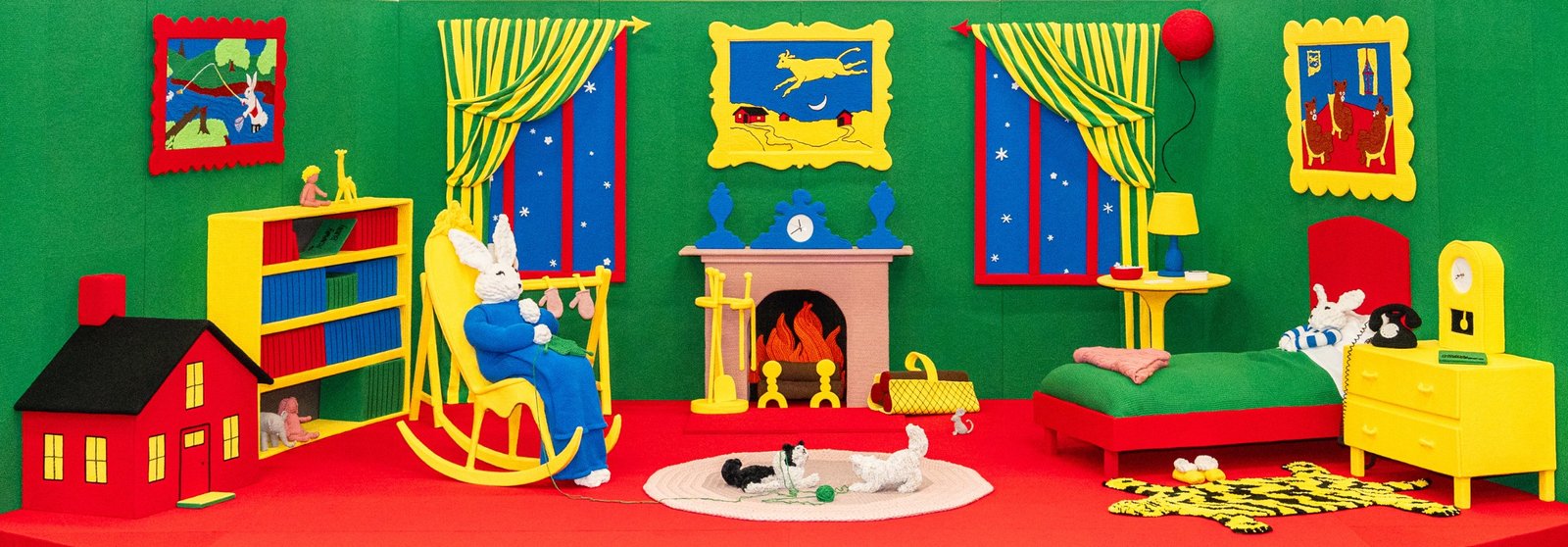
Goodnight Moon – A Fiber Tale is a full-scale fiber installation that reconstructs the Great Green Room from Goodnight Moon, translating Clement Hurd’s illustrated interior into a three-dimensional environment rendered entirely in yarn. Walls, floors, furniture, books, paintings, animals, and dolls are fabricated by hand, forming a continuous material field that reads as familiar even before its construction fully registers.
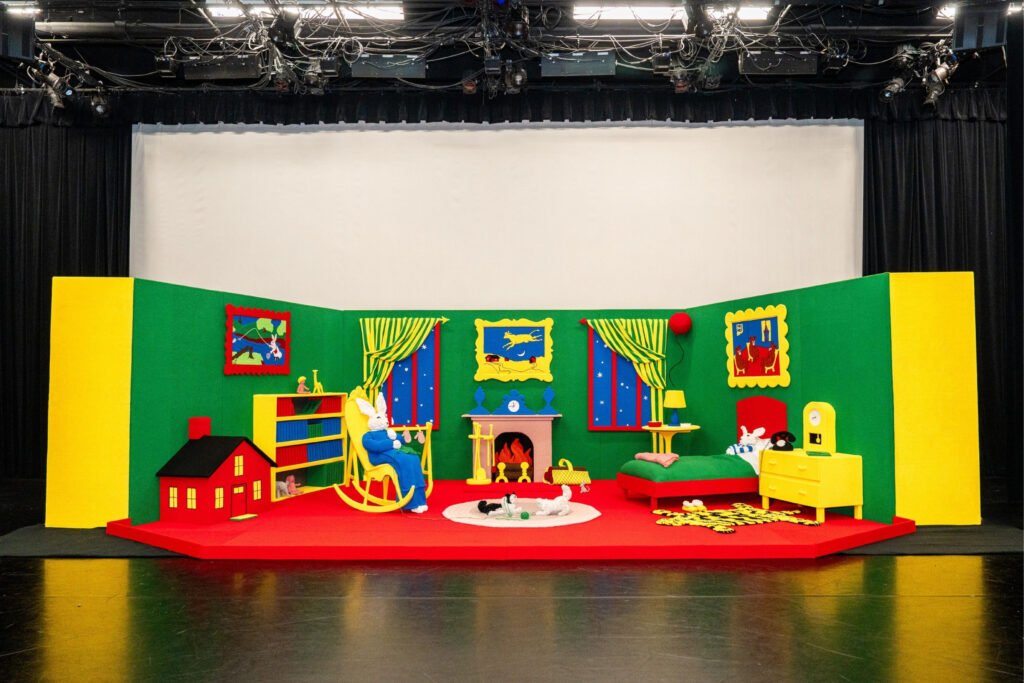
What is remembered as a small, intimate illustration appears at architectural scale, dense with texture and detail. Recognition comes first; only gradually does it become clear that every visible surface has been formed through prolonged, deliberate making. The room remains legible as an image while asserting itself as a physical presence, asking the viewer to hold remembered imagery alongside the undeniable fact of its materiality.
For many viewers, the work produces a moment of stillness before analysis—a pause shaped by recognition, memory, and care. The familiarity of the room carries personal weight, and its careful reconstruction invites a slower form of looking, guided as much by recollection as by attention to what is physically present.
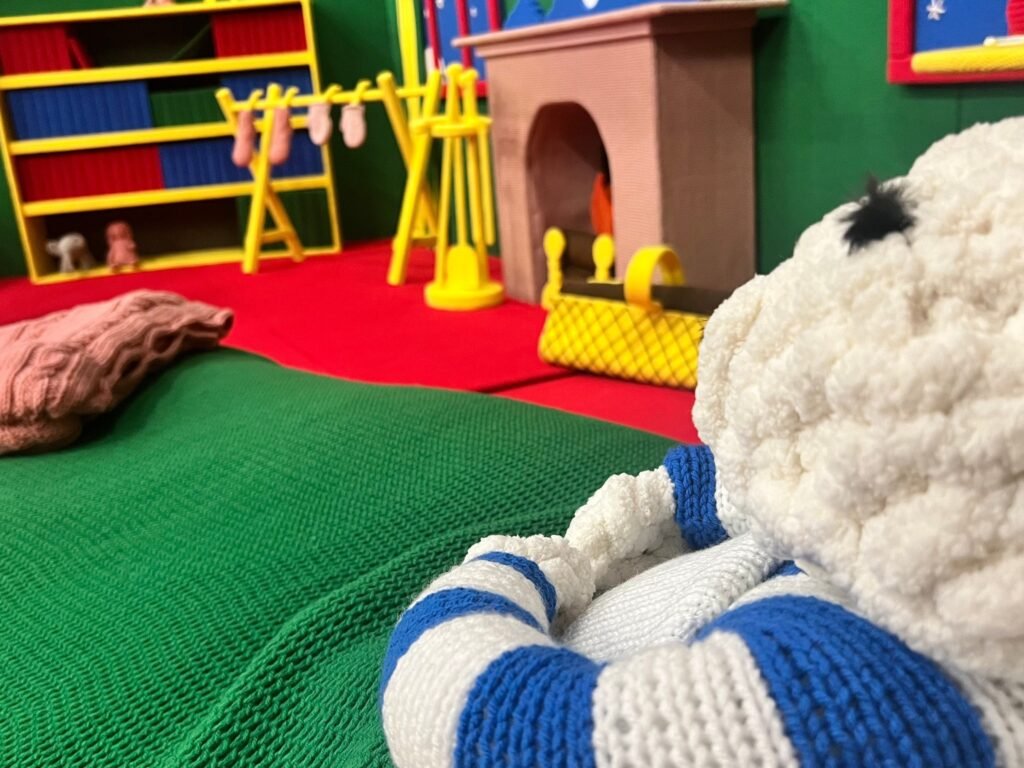
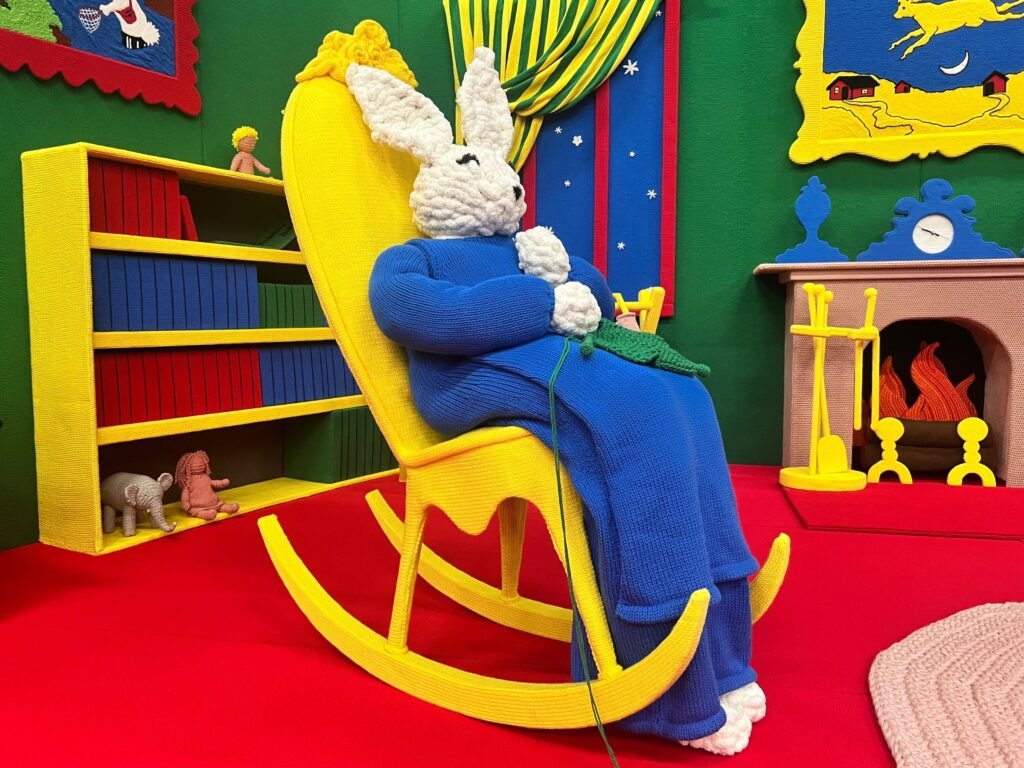
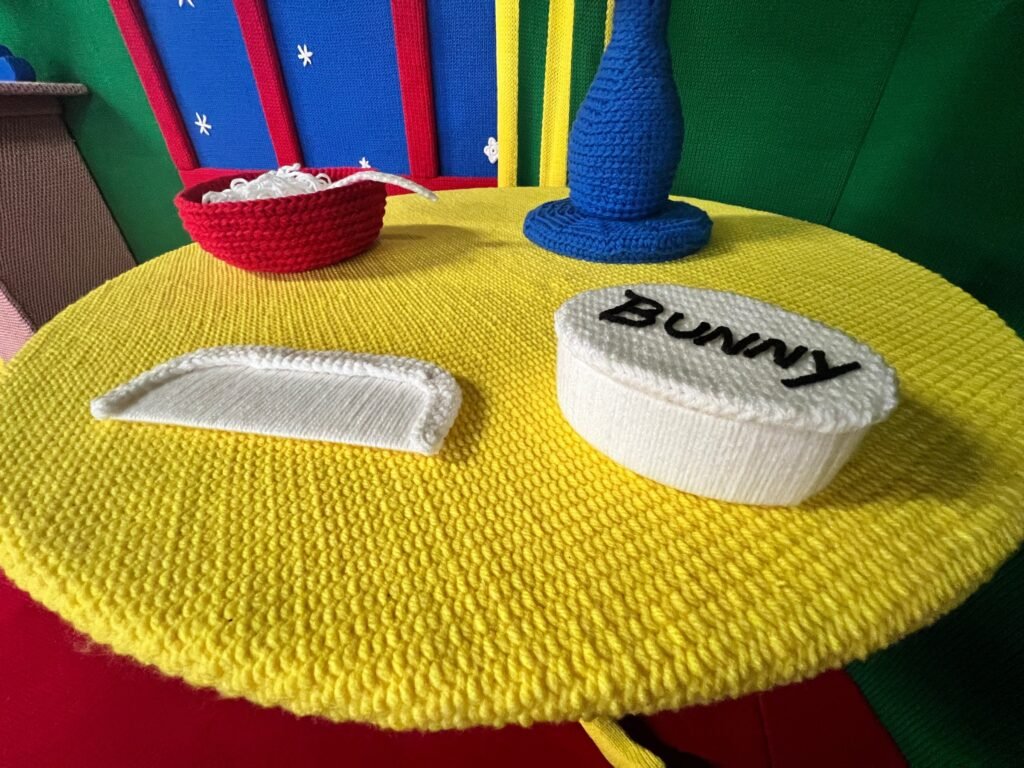
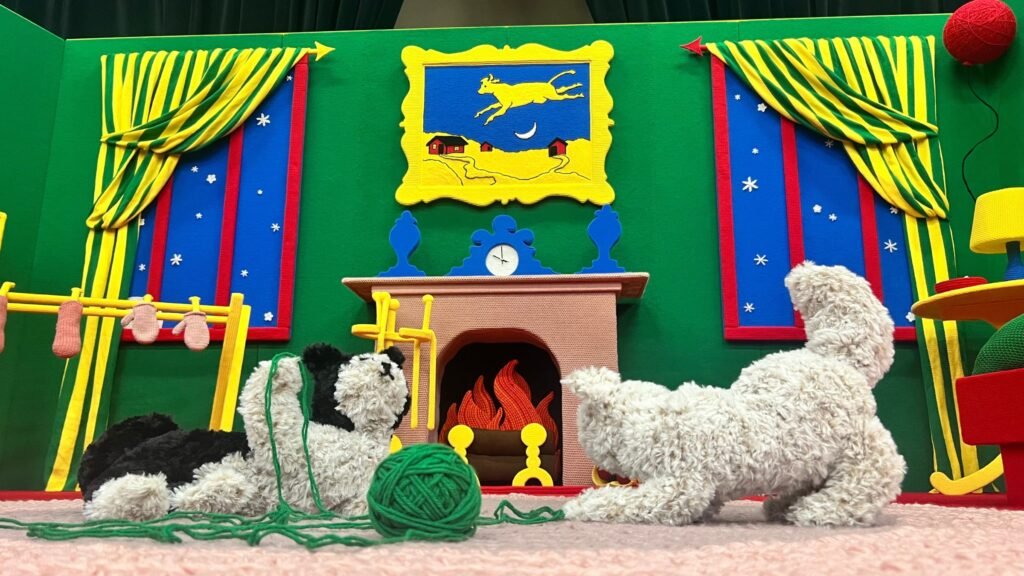
As the work developed, fidelity to Hurd’s illustrations became increasingly important—not as literal duplication, but as a way of preserving the internal logic of the space. Decisions about proportion, surface, and detail were guided by how the room needed to read once translated from page to object, allowing the illustrated world to remain intact even as it was transformed through fiber. Variations in texture and scale support this coherence, ensuring that the environment holds together perceptually at full size.
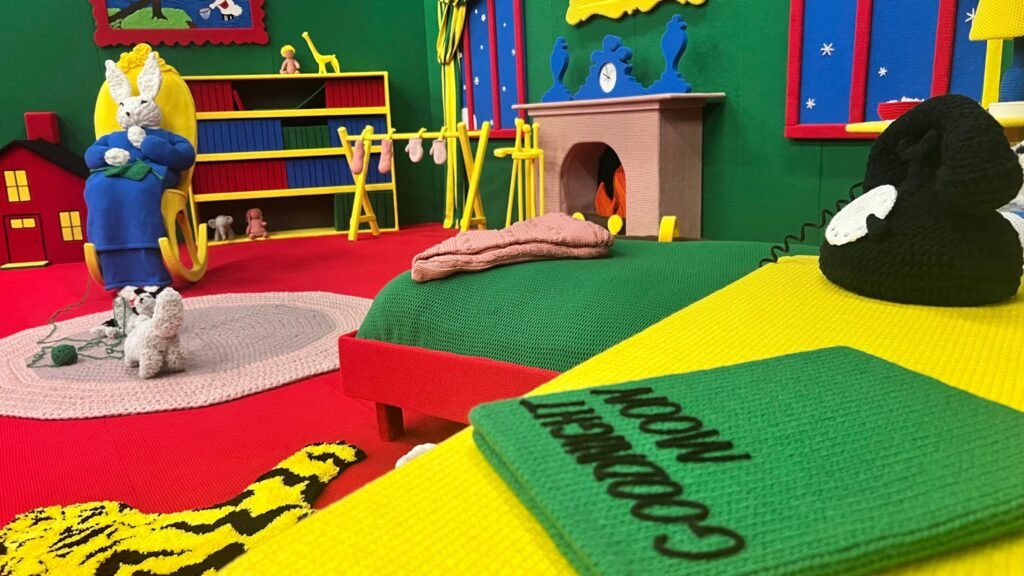
Structural elements of the installation were built in collaboration with Ken Chapin, whose construction made the scale and stability of the room possible. Created with the express permission of HarperCollins Publishers, Goodnight Moon – A Fiber Tale premiered at Space to Create in Trinidad, Colorado, where an intended one-month exhibition extended to six months and drew more than 10,000 visitors. The installation has since traveled to the Dairy Arts Center in Boulder and The Schoolhouse at The PACE Center in Parker, Colorado.